
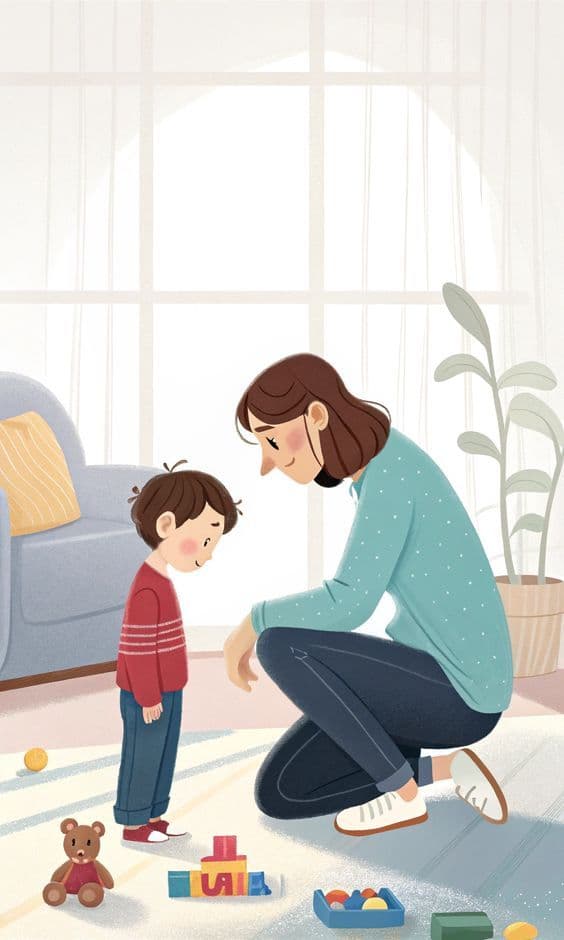

Does a ‘bad behavior’ make our kid a ‘bad kid’?
Musa, aged 11, came home from school and saw his younger brother enjoying ice cream. He immediately pinched him, snatched the ice cream, and started eating it. Isa burst into tears, and their mother rushed in, shouting, “You are so rude and selfish!”
Feeling attacked, Musa shouted back, “I hate you! You never understand my feelings…”
This is a moment where a mother wasn’t able to validate her child’s feelings. Musa ended up believing he was a “bad kid.”
As Dr. Becky reminds us: “Kids have to feel good inside before they are able to have good behavior.”
So how can we help our kids feel good inside?
Children need to know that they are good and lovable especially when they are struggling. Kids are always noticing how we think and feel about them, and they begin to internalize that as their identity. If we can remember that “our kids are having a hard time, not giving us a hard time,” it becomes easier for us as parents to respond with empathy.
Under every “bad behavior” is a good kid who is struggling and in pain.
Let’s revisit the story. What Musa actually needed to hear in that moment was something like:
1. “I know you’re having a hard time.”
2. “You are a good kid having a hard time. No matter what, I always believe that. I will always love you.”
3. “Something must have felt really bad for you to act this way toward your brother. I want to understand what’s going on.”
4. “You are not a bad kid. I’m here to help you through this.”
These words don’t excuse the behavior but they remind the child that he is safe, loved, and not defined by his mistakes.
Of course, boundaries are still important. But they work best after the child feels seen, safe, and understood.
⚜️If this resonates with you, repost it to spread the message 🙏